I admit: I didn’t know much about pistachios before I starting writing this. I didn’t know that it takes a tree around 10 years to yield a bountiful harvest. I didn’t know pistachios have an outer pink skin. And I didn’t know that in some countries they grow wild.
I also admit that I just spent the last hour watching videos of nomadic Iranian families foraging for wild pistachios. Pistachios that are teeny tiny and don’t crack open when ripened. Watching these families pick the seeds (I also learned that a pistachio is a seed and not a nut) I was reminded of times when I’ve gone berry picking for wild blueberries. In my state of privilege and geolocation I don’t have to forage for food to live. I love picking berries but, if I’m honest, the moment I’m bored or it gets hard I have the luxury of stopping.
Wild blueberries are really hard to pick. They are tiny. They are surrounded by leaves making them hard to get to. The yield hardly matches the energy output. I also end up eating everything I pick. It’s hardly an exercise that ever results in any meaningful harvest…for me anyway.
However, when you watch nomadic families pick wild pistachios it requires an intense mountain climb, enduring significant heat, picking for hours for a small yield, and then a hike home to process the seeds. It’s a long day’s work but one that’s necessary for survival in remote locations.
Pistachios are one of only two types of nuts mentioned in the Bible. Why? There were certainly other nuts in rotation at that time but pistachios are specifically mentioned in the story of Joseph. Joseph’s father, Jacob, wanted to send a gift to the ruler of Egypt not knowing that the ruler was his long lost son, Joseph. He commanded his sons to take from the best of the land: honey, fruit, balm, almonds and pistachios. A gift and an offering to the one standing in place of Pharaoh.
At the time, pistachios wouldn’t have grown in Egypt and so this would have been a beautiful representation of the abundance of the land of Canaan, the Promised Land, and a highly coveted food in Egypt. But why does this matter?
I don’t know what kind of pistachios grew in Ancient Israel. I don’t know if they were the cultivated kind that grew to the point of popping open creating a beautiful melody of ripening seeds among the trees or if they were the wild kind that took work and grafting to produce a harvest of intensely flavoured seeds. However, what I do know is that abundance takes work.
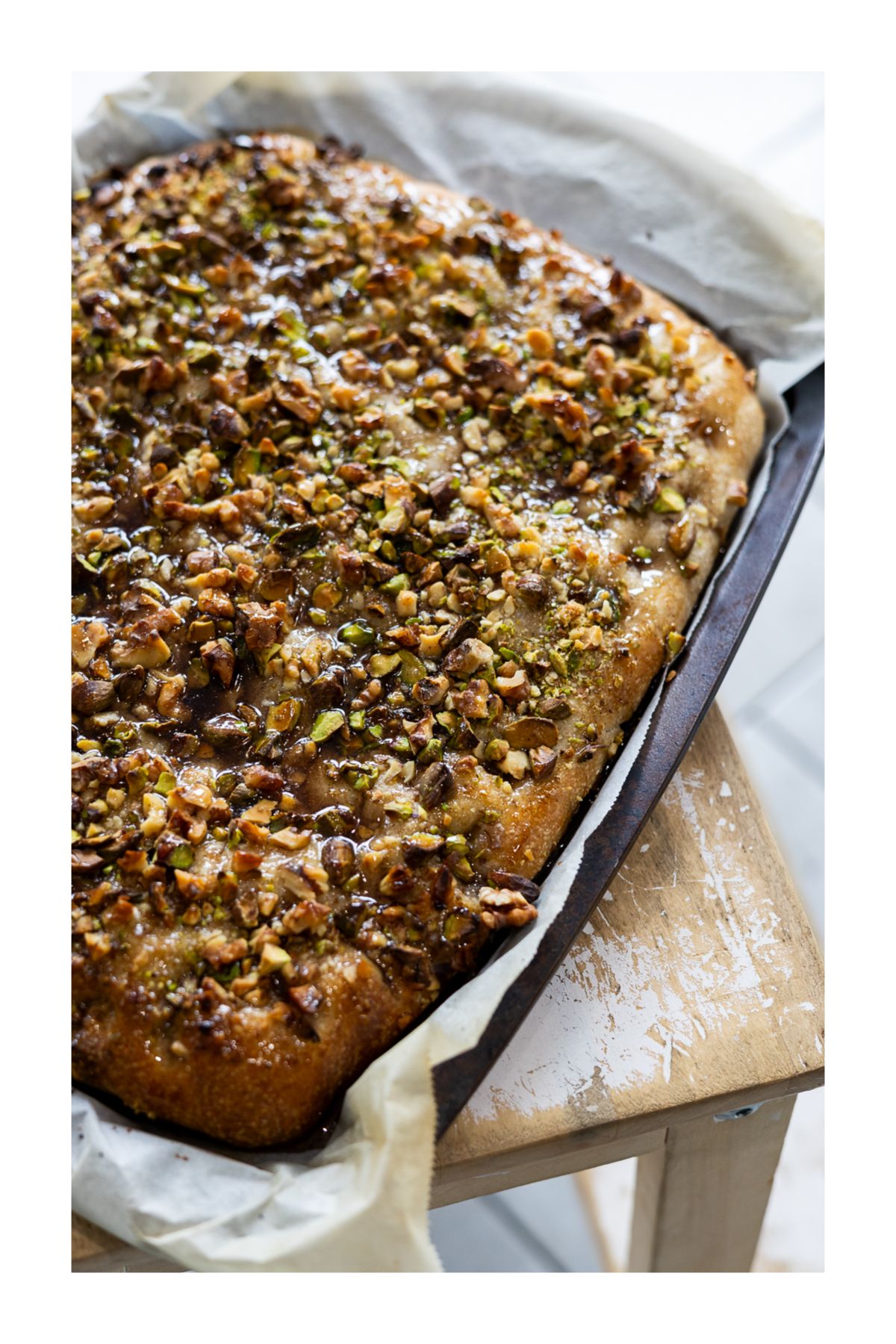
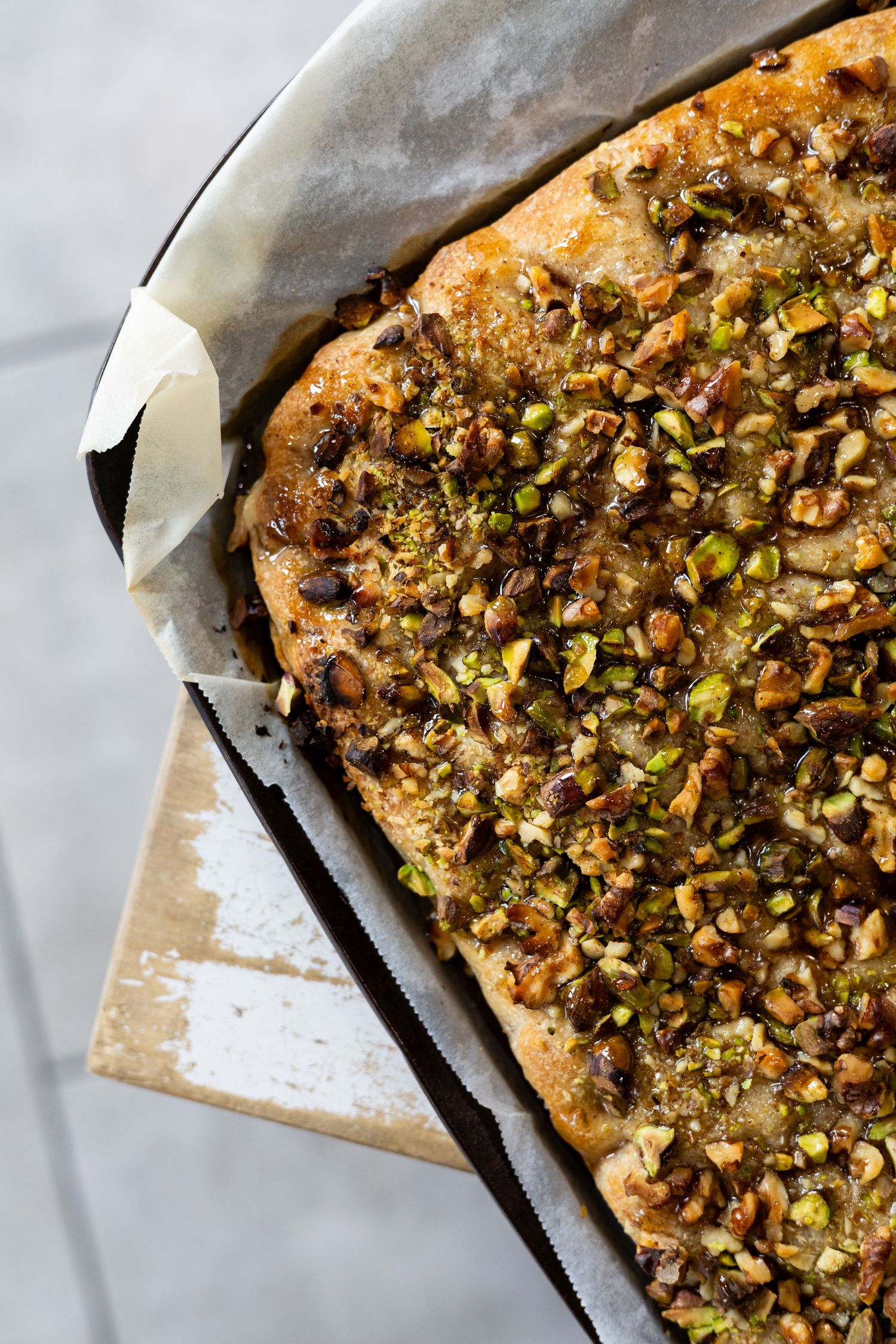
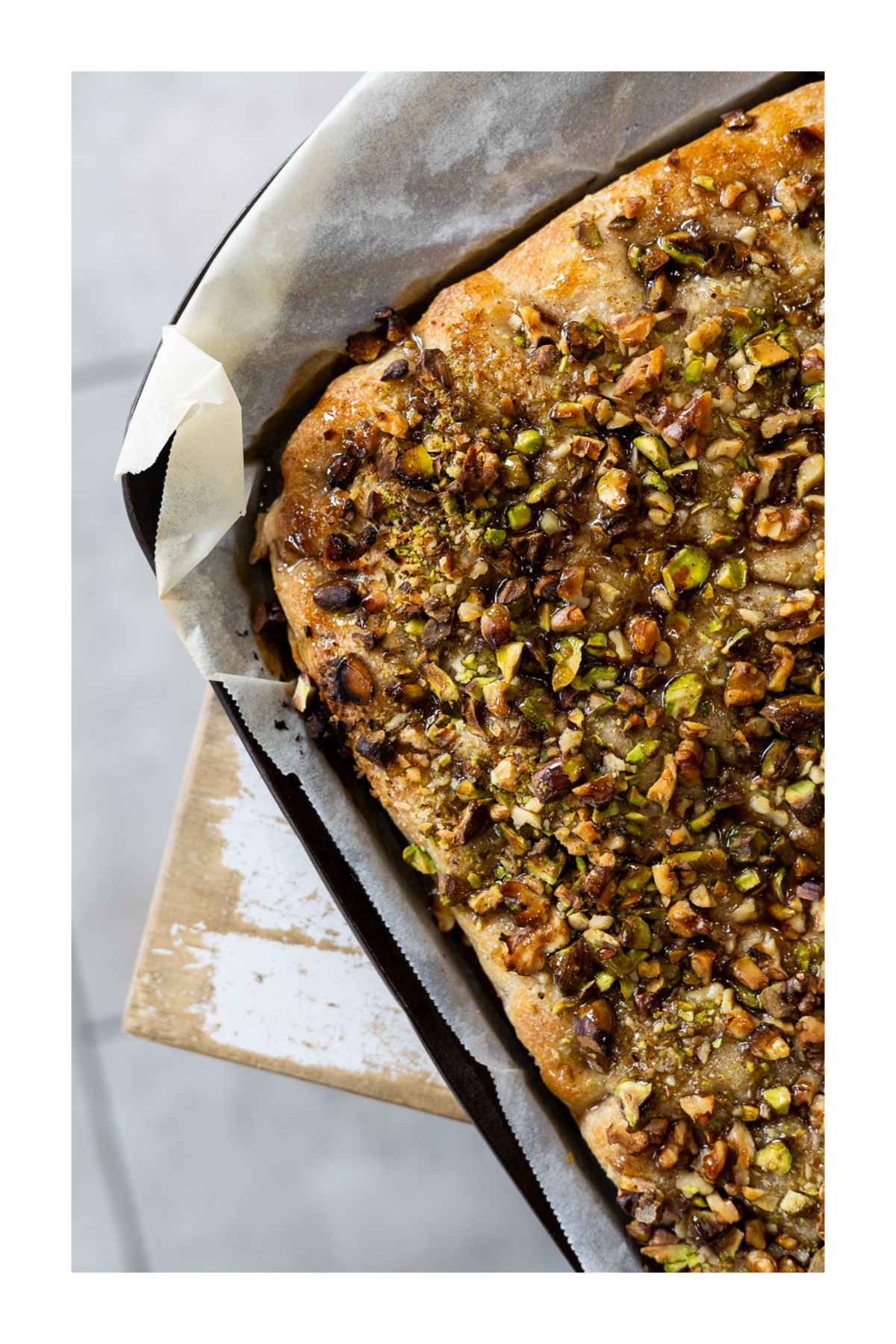
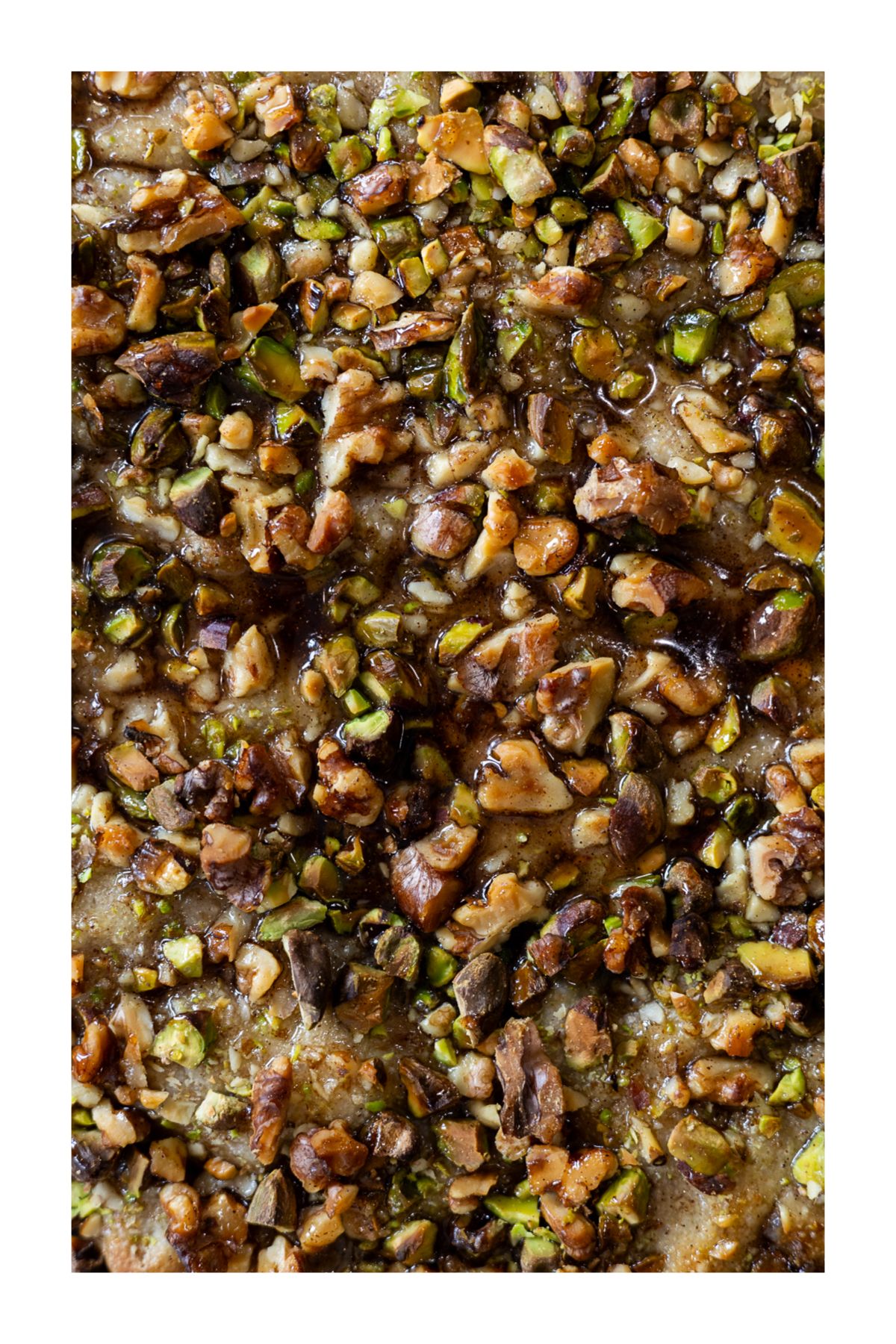
I look at this honey & pistachio focaccia and I know the work that went into it. I did not have to pick the pistachios or harvest the honey but I know the care and the hours I put into crafting this delicious bread. Yet, while I’m working the dough and monitoring its development over several days I don’t ultimately know for certain what the end result will be. Jacob sent his gift to Joseph in faith that the offering would cultivate a freedom and blessing for his family but ultimately did not know the outcome. Likewise, I show up in the things I’m called to hoping to cultivate freedom and blessing but ultimately do not know the outcome.
Picking tiny wild blueberries or tiny wild pistachios can feel like time wasted. However, for some it’s the difference between literal starvation or life. When Jacob sent that food offering to Joseph it created an environment for Joseph and his estranged brothers, who sold him into slavery, to share a meal together. Jacob couldn’t have foreseen that end result. He didn’t even know his son was alive! We don’t often know the purpose of our tiny acts of faith and whether they will result in anything meaningful. But maybe we aren’t meant to know. Maybe we are meant to show up faithfully in each blog post, each photograph, each day at the office, each conversation with a friend in faith that with God nothing is wasted and abundance takes work.
The daily grind may feel like picking wild blueberries and pistachios (what a delicious bread that would be); it feels like more effort than yield. And yet, the small amount we can give can be used by a big God to do big things.